
How Bench Warrants Work in Midland County
A bench warrant comes from the bench itself, meaning the judge. It adds no new charge. The court uses it to pull someone back in so the case can move, and Michigan court rules and statutes use that exact term. So do these Midland County pages.
Case flow: a date is set › the person does not appear or comply › the judge issues a bench warrant › the warrant is served, recalled, or resolved at a hearing
Three triggers account for most bench warrants in Midland County. Missing an appearance is the first. An unpaid fine or cost is the second. The third is ignoring another court order, including probation terms.
The 48-Hour Rule for Midland County Bench Warrants
Michigan law treats a first missed date differently from a repeat. Under MCL 764.3, a first qualifying failure to appear creates a rebuttable presumption that the court waits 48 hours for a voluntary appearance before issuing a bench warrant. The same statute carves out exceptions where a Midland County judge may act at once. Assaultive and domestic-violence matters are two examples, and probation or multiple pending cases can change the analysis. MCR 6.103 supplies the matching court-rule framework.
Key Rule: The 48-hour presumption is not a promise. Whether it applies depends on the charge, the case history, and the reasons the court records.
Do not calculate a deadline yourself. Ask the court or a lawyer what applies to the case.
Bench Warrant Issuance in Midland County
A Midland County judge reviews the case file, finds that a required appearance or obligation was missed, and signs an order. The clerk enters it, and the warrant becomes part of the case record. Nothing after that is automatic. The public county report does not label rows by warrant type, so a name on that list tells you nothing about whether a bench warrant, an arrest warrant, or a traffic default sits behind the case. The report alone cannot settle that question for anyone. Note: Ask the clerk to describe the warrant on your own case rather than classifying it from the report.
Default Judgment, License Hold, or Bench Warrant
People blend these three outcomes constantly in Midland County, and they are not the same thing. A traffic matter can produce any of them, or several at once. Each one takes a different fix.
| Outcome | What causes it | Where it is resolved |
|---|---|---|
| Default judgment | A late or missing response to a citation | 75th District Court, Traffic Division |
| License consequence | Failure to answer or comply with a traffic matter | Michigan Secretary of State process |
| Bench warrant | A missed court date or another failure to comply | The judge who set the case |
| Civil infraction | A noncriminal violation handled by citation | The court named on the citation |
How Bench and Arrest Warrants Differ
A bench warrant and an arrest warrant reach the courtroom by different roads. An arrest warrant begins with a sworn complaint and a probable-cause finding about a crime. A Midland County bench warrant begins with a court obligation that went unmet.
| Point | Bench Warrant | Arrest Warrant |
|---|---|---|
| What starts it | A missed date or failure to comply | A sworn complaint and probable cause |
| What it does | Brings the person back to an existing case | Authorizes taking a person into custody |
| New charge | No | Usually tied to a charge |
| Typical fix | Appear, reset, pay, or ask the judge to recall it | Court process after arrest or surrender |
Probation Remand and Court Security in Midland County
Probation and parole violations are their own category in Midland County. The sheriff's Court Security division screens the courthouse, keeps order, and counts the arrest or remand of probation and parole violators among its duties. That work happens under a judge's direction and comes with no public list. If probation is part of your case, raise it in the first phone call. A violation can change both timing and options, so involve a lawyer before any appearance.
If You Missed a Court Date in Midland County
Act quickly and in the right order after a missed date in Midland County. The court cares whether you appear, and the record of what you did next matters.
- Look for the case in the open warrant report and note the run date.
- Call the Criminal Department at 989-832-6702 or 989-832-6718 and give the case number.
- Ask whether the matter is traffic or criminal and what the court requires next.
- Speak with a Michigan lawyer about exceptions, probation, and multiple cases.
- Follow the court's instruction, keep the paperwork, and ask when the record changes.
Clearing a Bench Warrant in Midland County
Midland County publishes one path, and it runs through the Criminal Department. Anyone listed on the open warrant report is told to call and arrange an arraignment date. Everything after that depends on the case.
Caution: Paying a fine does not automatically recall a bench warrant. Ask the court whether the warrant will be withdrawn before you send money.
Midland County posts no public recall form, warrant-bond schedule, or after-hours surrender window. So the reliable move is a phone call, a scheduled date, and written confirmation of the outcome.
Midland County Courts That Issue Bench Warrants
Three Midland County courts sit in one building, and each handles its own docket. Finding the right counter is the first step.
| Court | Handles | Phone |
|---|---|---|
| 75th District Court | Misdemeanors, traffic and civil infractions, arraignments, preliminary examinations | 989-832-6700 |
| 42nd Circuit Court | Felonies, serious misdemeanors, domestic relations, appeals from lower courts | 989-832-6735 |
| Probate and Juvenile Court | Probate matters and juvenile cases, which stay out of public case search | 989-832-6880 |
The county courts page lists each bench, its hours, and its phone number, and the Probate and Juvenile Court page carries that bench's contact details.
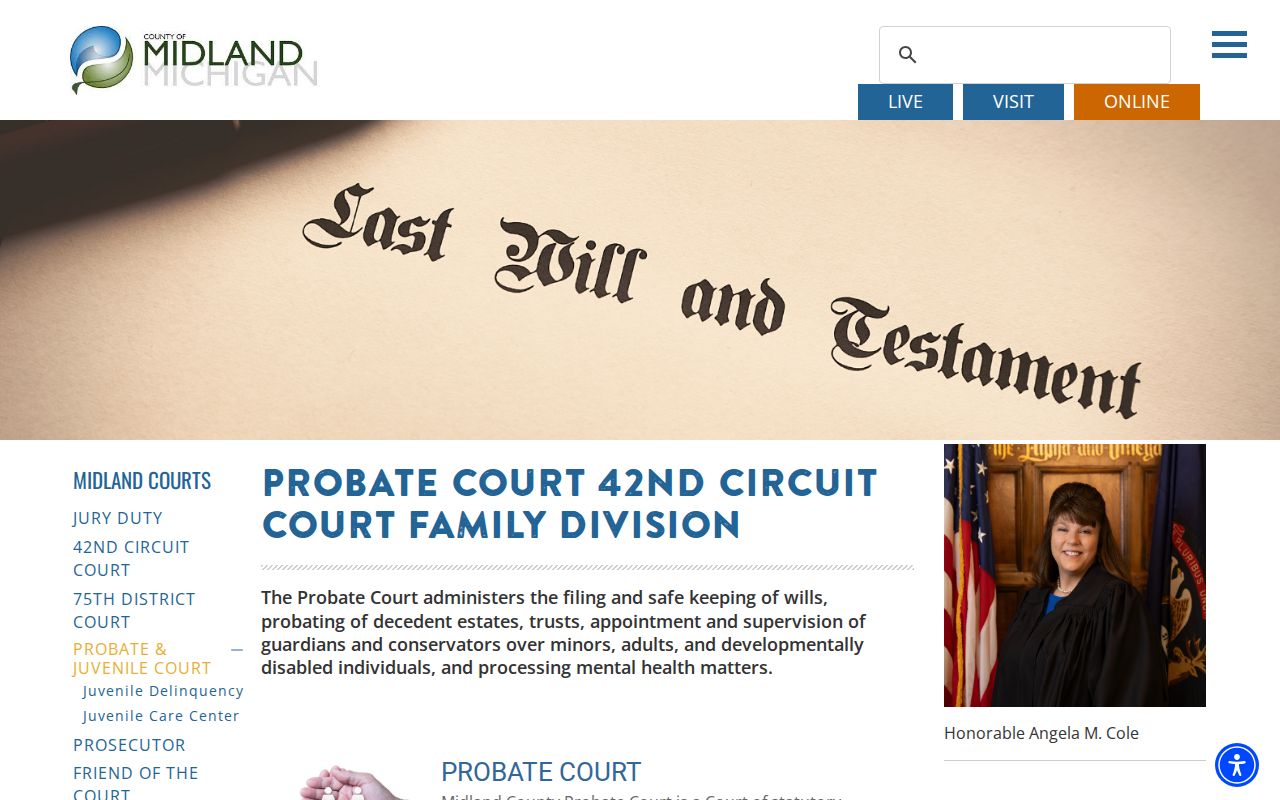
Juvenile files stay outside the public case search in Midland County. A juvenile warrant question must go to that court directly.
Michigan Rules Behind a Bench Warrant
Two legal sources do most of the work here, and reading them in plain terms is easier than it sounds. The statute covers failure to appear after a notice or summons and the first-offense window. The court rule covers the same ground from the judge's side, plus the arraignment that follows an arrest. The Michigan Court Rules, Chapter 6 holds the failure-to-appear rule and the arraignment timing, which is what a Midland County reader usually needs.
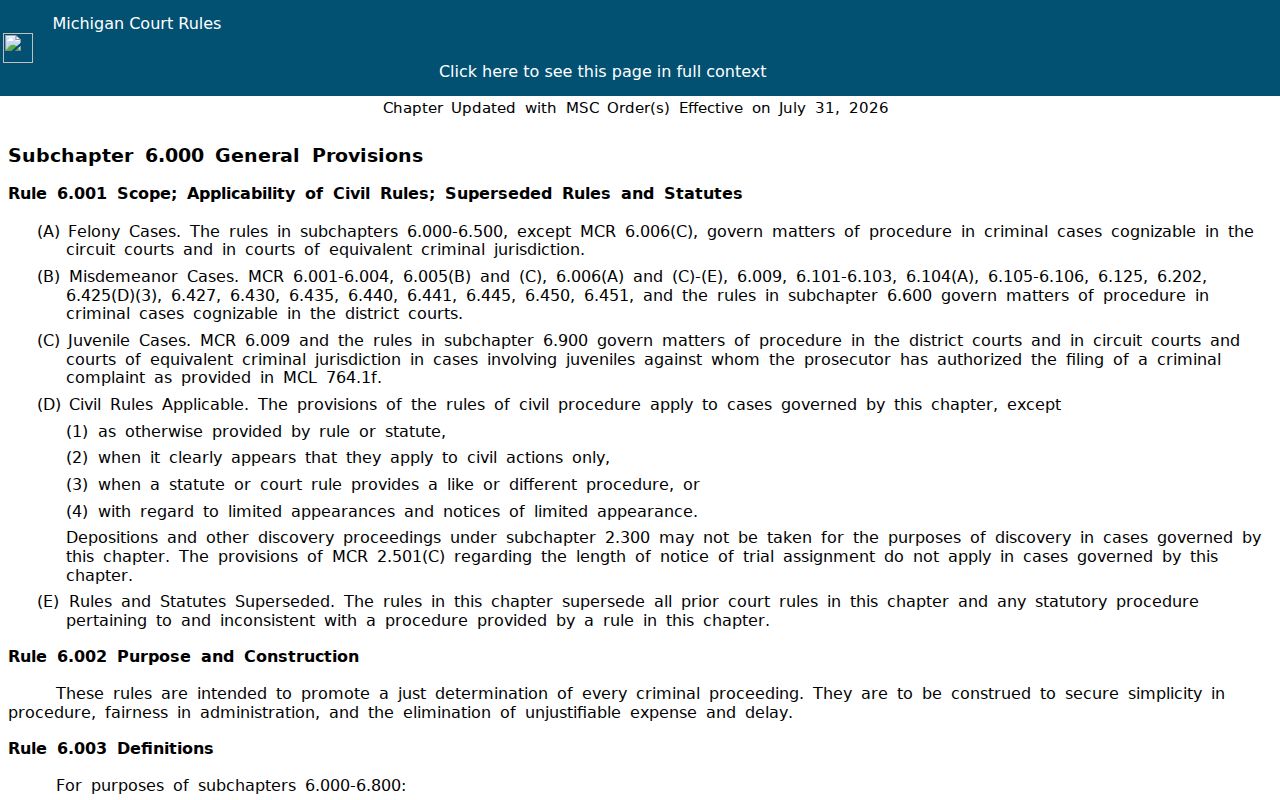
The statute on failure to appear supplies the 48-hour framework most Midland County questions start from.
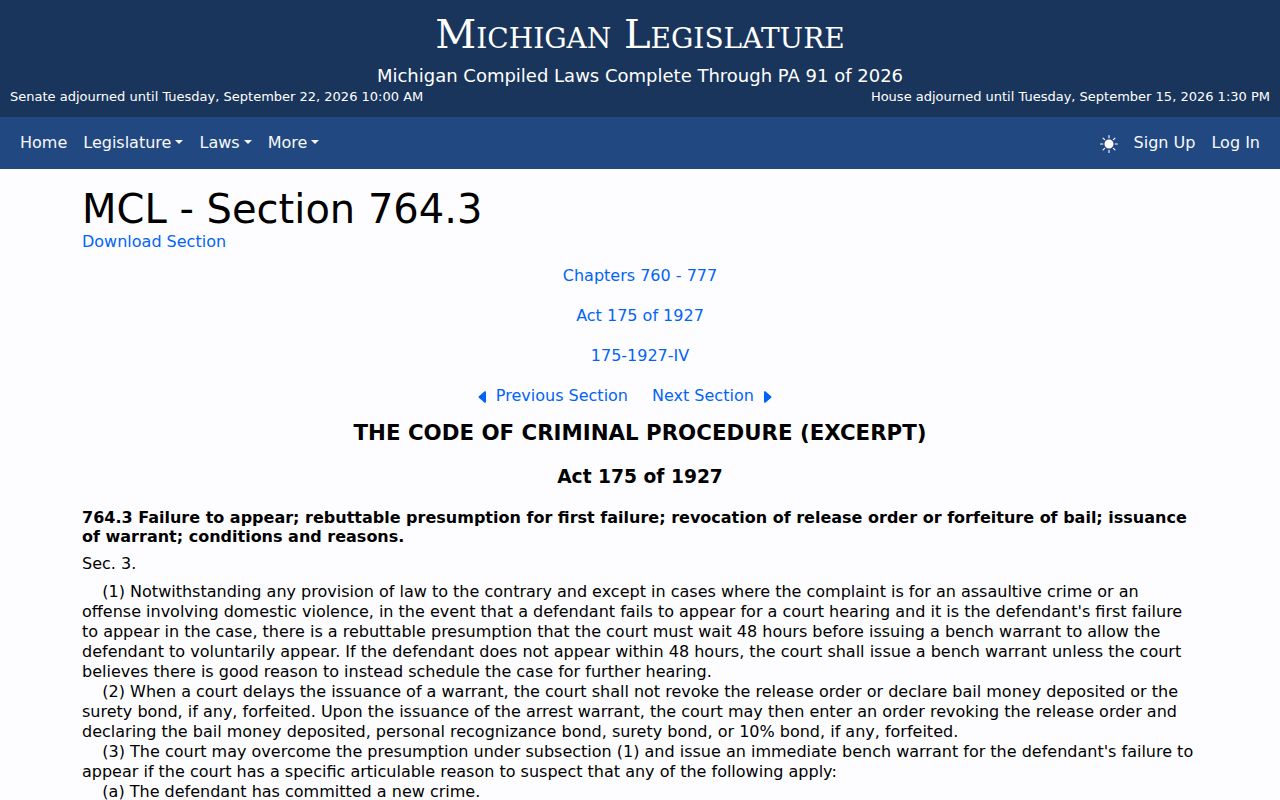
Neither source can predict a particular case in Midland County. Only the court can do that.